I don’t charge this as a personal diary if you thought so, it’s more like an informative tale of my realisations and solutions that has come out of my tests.
My iPhone on a selfie stick works well but limits the coverage of each photo which means I need more photos so I tried my 3,5 meter microphone boom but the weight of the boom if you tilt it makes it hard to use, even though the total weight of the boom is just 900grams. Even changing to a smaller ballmount on top didn’t do much.
So now I’m looking at a 3 meter long carbon fibre boom, it’s 400grams.
If something has a weight that makes you think twice before taking it with you will not be used often. That’s also a reason I use an Olympus slr and not a full frame.
Dude, I love that you proactively posted this exact post! Thank you! I’m heading to Kenya in August and was hoping to get a temp drone permit to bring for some mapping/modeling for rural Forest Garden demonstration site our friends are working on, as well as video coverage of the trip. However, the permitting process seems prohibitively expensive as I cannot process the permits myself and need a local Kenyan to file things on my behalf, and the service fees for this seem excessive. It’s 2 hectare site and I was thinking perhaps just a balloon or extension pole to get some elevation would work. Obviously nadir for orthomosaics wont work due to the pole and operator appearing in the pictures, but I think small angles would work for both.
Have you actually done this or know someone who has? What are the tips to make it actually work well? It would be helpful to be able to somehow see the screen to make sure things are framing correctly. Are there some remote display options via bluetooth or wifi that would help with that? Also, my iPhone 15 Pro has LIDAR, but not sure the effective range and probably overkill for the use case. But is this an option I should be looking at? Can ODM process LIDAR data? What LIDAR capture apps should i consider if I’m using a 9-12’ carbon fiber pole?
(by the way, I found this post using Bing Co-Pilot AI search - this was the #1 reference for my question: “Has anyone done photogrammetry with an iphone on a pole when drone flight is not feasible?”)
Thanks so much for the update! I see how that approach could be used for nadir data capture of better orthomosaic results.
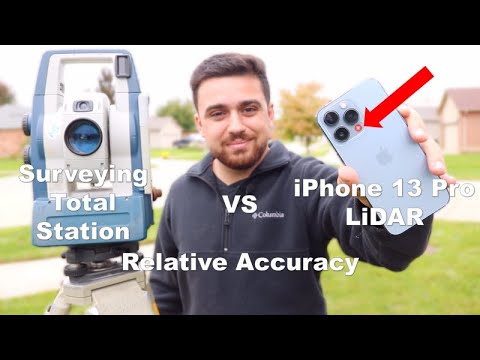
Considering the LIDAR option, I came across a video I forgot I had seen last year comparing accuracy of results of an iPhone 13 Pro LIDAR app vs. a total station’s results.
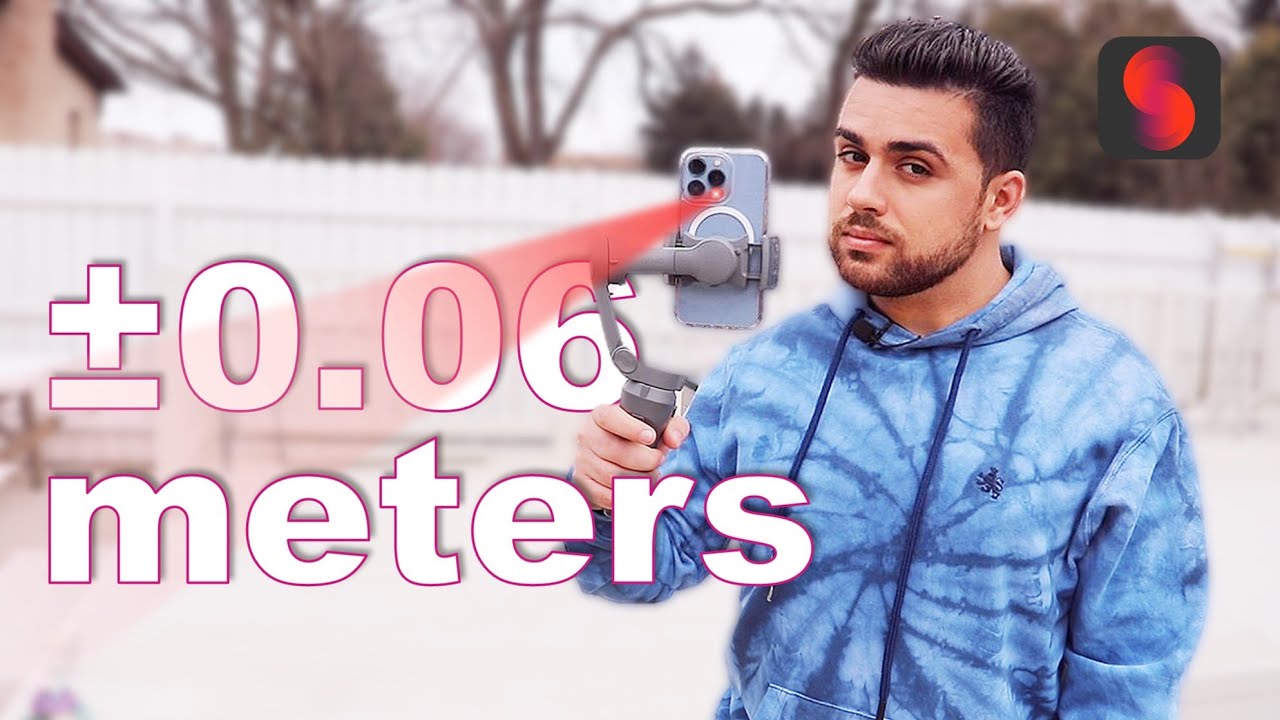
And in looking that link up again, I came across this one suggesting stabilization with the DJI Osmo Mobile gimbal to improve accuracy of an iPhone LIDAR scan…
I was already looking for a gimbal since I have an iPhone 13 Pro already. I hadn’t thought about combining the extension pole and a gimbal but that’s intriguing. GIven the LIDAR range for an iPhone and/or their available LIDAR scanning apps (<= 5.0 m), I think I would need to lower the extension pole and walk a tighter grid. I’m thinking of using a grid planning tool like DroneLink to plan and also walk out a grid flight path with the pole/iPhone.
I think I’ll do some LIDAR tests on an acre with some features to see how it works at different heights and LIDAR scanning settings.
Yes, I’m looking at the 2" square reflective LIDAR targets on amazon for this…
I was thinking drilling a hole through the stack at the center point and using framing nails to anchor them at some key more visible spots of the site. Or sticking them on the plastic center-point pins that I use with some disposable aerial GCPs that I’ve painted to make more durable for reuse and visible from the drone. Amazon.com
Open to any/all suggestions.
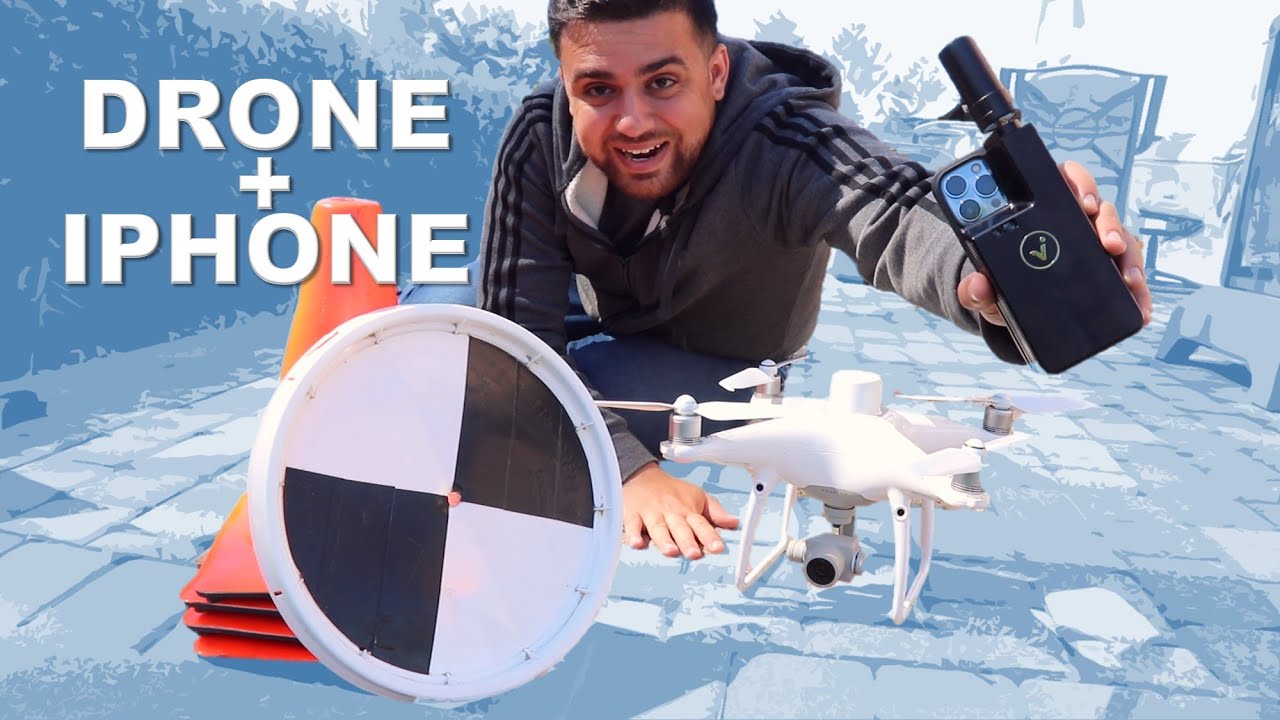
I was also intrigued with the idea of combining drone photogrammetry with phone LIDAR and/or photogrammetry to improve the completeness and quality of a site model such as discussed in this video…
I don’t have the RTK capabilities for drone or phone, but I’m thinking that if I used aerial-sized GCPs and placed the LIDAR targets on their center point pins, I could georeference the data sets together using these common GCP without needing RTK.
If I took photos with the phone and gimbal I can see including those in the ODM job but I’m not sure how well it would handle these photos taken from different platforms and different perspectives. Alternatively, I guess I could run them as separate jobs and then integrate the point clouds and DSM data in QGIS or ArcGIS.
I’ve got a good spray paint GCP target template that I’ll use when possible. And I’m using a Trimble DA2 antenna with the Catalyst 1cm level service on an hourly pre-purchase basis ($13/hr) which has been working well so far as a very affordable option for shooting GCPs.
Can you clarify what you mean by “need to drape the points in a color from an image to make it look good”? I’m not quite following.
I’m really just looking to get a DTM, so colorization of the model/point cloud isn’t an issue. However, it raises the question of how you identify these ground control points unless you have a target that has some relief to it that you can recognize in the point cloud and determine the center point. But let me know if you think I’m misunderstanding something.
I can speak to my experience with terrestrial LiDAR, we didn’t get any useful data back from retroreflective materials in our scans. The reflective tagets areas were easy to pick out as they had no data (no returns) where they were placed despite having good coverage all around them. Paper targets worked well for LiDAR. Our scans were coloured with either RGB photo projections or intensity of the returns (which varied by matrial type, wood, fibreglass, painted steel, plastic)
Retroreflective targets worked well with robotic total stations.
How did the camera on a pole work out for you?
Would a larger weather balloons or many helium filled party balloons be an option to lift your camera?
Depending on wind conditions would a kite be an option? Have a search for Picavet and KAP (Kite Aerial Photography) for camera mounts.
Cheers,
Jeff