As some of you know, when we established a non-profit to support OpenDroneMap, Piero transferred the installer ecosystem to the org to ensure we would have enough runway to startup the support for the ecosystem in a sustainable way.
In year one (late 2022 through 2023), we held steady, worked on administrative setup while I continued to work full time in my day job.
In year 2 (late 2023 through 2024), we hired on Brett (Saijin_Naib) under community support and me as executive director, which provided Brett and I the time to take seriously support on this forum, rebuild the documentation, and started to do two things simultaneously: have conversations with downstream beneficiaries of OpenDroneMap about models for supporting this ecosystem (more on those conversations later) and piloting upstream support for libraries and software that OpenDroneMap depends on. This included a small project with OpenMVS founder and maintainer Dan Cernea extending OpenMVS to be more scalable and memory efficient. We also identified larger projects to work on and find funding for.
Now that we are solidly in year 3, I would like to announce what we’re calling our Headwaters Project. This is a concerted effort to support critical libraries and software projects upstream of our project. For example, how best can we maintain and extend core libraries that we benefit from? And core to that approach is extending material support to library maintainers so that they can maintain and extend the tools that matter to OpenDroneMap most.
We’ll also ensure that work on ODM, WebODM, and related tools are also adequately resourced, something that is quite present as we seek someone to lead and maintain ODM. But I wanted to announce the Headwaters Project first as I think one of the unique opportunities of a user facing project is the ability to support the range of projects that few end users know about, but so many of us benefit from whether we know the names of those projects or not.
Sure: high level is a fund for ensuring we make sure we contribute to the software (mostly libraries) that make the high impact work we all do with OpenDroneMap possible. Lower level: I’m hoping to announce a project or two that fits under this umbrella soon. So: stay tuned!
Stephen touched upon it a few times in that post, but a bit more succinctly:
The Headwaters Project is a series of initiatives to support the ecosystem of programs, utilities, libraries, etc. that power the OpenDroneMap ecosystem. This means giving back to and supporting the projects that we rely upon, in order to make Open Source development more sustainable.
More details as they become available, but our first task under the Headwaters Project is to reduce memory usage in ODM at the texturing step. The idea is to replace mvs-texturing with a more modern approach, thus significantly reducing the use of memory at this step.
I’ll update here as I know more on timing and when I do so, I’ll give a breakdown of the differences in approach and what we expect this to gain.
FYI: I’ve got budget controls to “pay” for open source software. But it needs to be all properly organized with proper business paper work so no one “in particular” looks like they’re getting a donation and it’s not just 3 chipmunks in a suite when an auditor looks at it.
To wit: ensure there’s a clear organization page documenting everything and a clear payment support structure. QGIS does a great job of this:
I make recommendations annually at end of budget year, to ensure all the open source products I use are sufficiently funded where there’s foundational support.
I’d also recommend you try to look at your commercial competition and calculate “equal value”. One of the greatest benefits of open source is we don’t have to pay for a bunch of “bundled” features that no one uses. For QGIS, in comparison with ArcGIS, they add so much modeling & data management & online access, etc, features when all I’m typically doing is making maps and adding some contours and printing a pdf.
Ah, QGIS has become a great model. When I was in public sector and wanted to support QGIS, it wasn’t so well documented and clear, which made allocating funding for QGIS quite difficult.
Now I like not just their donate page, which you link to, but also their finance section is quite thorough as well:
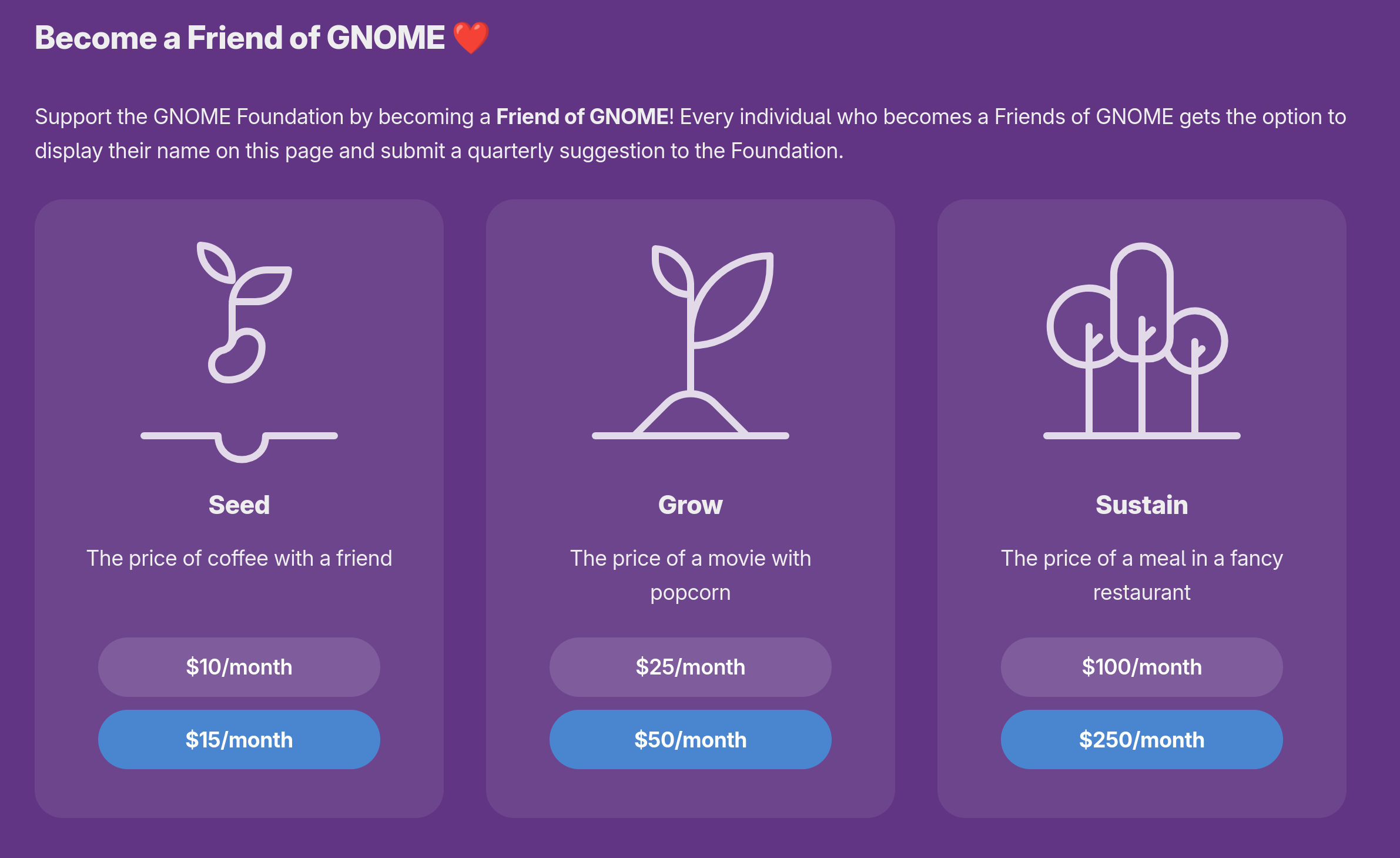
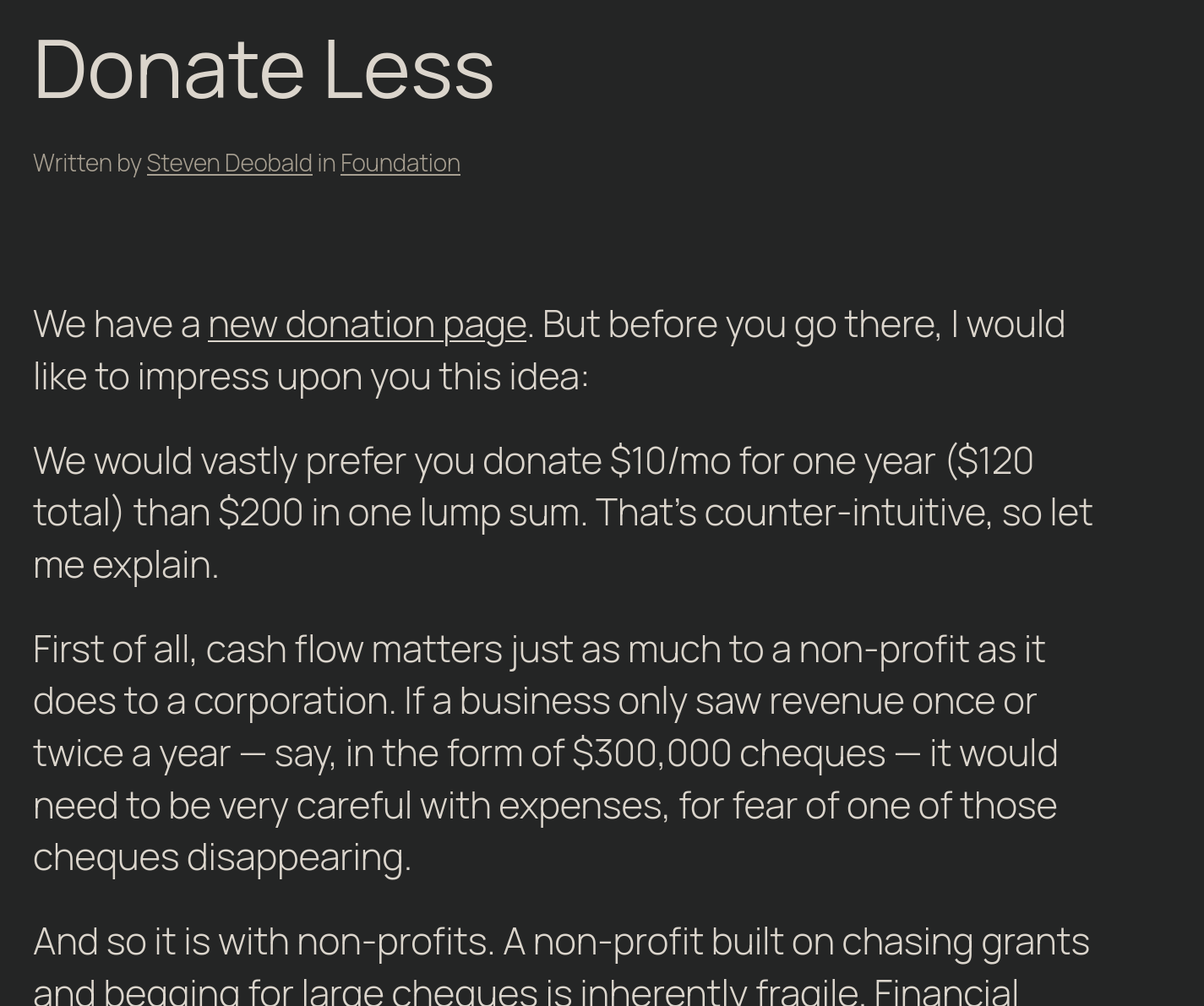
I want to capture some of the thinking in the space of donations and free and open source software. Thanks again to @kclandfill for the QGIS link. I really like Gnome’s approach here too (ht @Saijin_Naib for sending the blog post):
I really like the aforementioned blogpost because it addresses an important consideration in funding models: continuous and relatively predictable being easier to plan and build around than large funding amounts infrequently.
But as we think through sustaining the organization over the long term, Gnome’s writing on what makes for good donation structures is interesting. What sort of funding models result in the healthiest outcomes for OpenDroneMap, our upstream projects, and downstream ecosystem?
On a related note, I’ve also been paying attention to GDAL.org work through their funding model. Their prospectus is interesting, and every few months I look it up to see if they have a tier below $1000. I would like OpenDroneMap to provide some sustaining support to GDAL, but the tiers in the prospectus are a limiting factor. (FWIW, I’ll reach out to their team to communicate this, just noting it as it’s related to the client side of smaller, sustaining, lower risk donation structures.)
Anyway, I should probably open up a new thread on funding structures. We’ve got a few grant applications submitted that I’m hopeful will extend the work we’re doing. As we hear about those, I will update. Expect to see both more conversation on this and other revenue types (including a merchandise store) and the core and upstream support we do with that funding in the near future.
I think people would want to know where funds go. Currently there’s no public information on finances. I agree with @kclandfill that something like QGIS should be put in place. At a minimum previous and current year budgets.